Science Courses Offered At Federal Polytechnic Nasarawa (Complete Guide For 2026)
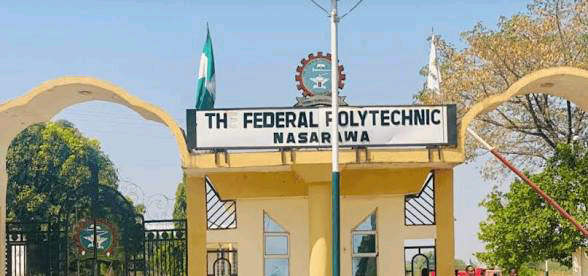
If you’re dreaming of studying science at a reputable Nigerian institution, Federal Polytechnic Nasarawa is one school to consider. With a range of science‑focused programmes tailored for today’s job market, this polytechnic equips students with practical skills and knowledge required in modern science, technology, and engineering fields.
In this guide, we’ll break down everything you need to know about the science courses offered at Federal Polytechnic Nasarawa, what they involve, career paths, and useful tips to make an informed decision.
Overview Of Federal Polytechnic Nasarawa
Located in Nasarawa State, Nigeria, Federal Polytechnic Nasarawa is a government‑established tertiary institution offering National Diploma (ND), Higher National Diploma (HND), Pre‑ND, and other programmes. The Polytechnic has several faculties, each with a mix of science, technology, engineering, and management courses.
It aims to deliver practical and application‑based education, helping students develop the skills needed to excel in both the workplace and entrepreneurial environments.
List Of Science Courses At Federal Polytechnic Nasarawa
Here are the main science‑oriented programmes currently offered in the National Diploma (ND) and HND levels:
Science Laboratory Technology (SLT)
This programme trains you to become a laboratory professional. Students learn how to:
- Conduct scientific experiments
- Use laboratory equipment correctly
- Test and analyse samples
Follow strict scientific procedures
SLT is great for careers in labs, hospitals, research centres, quality control units, and more.
Computer Science
Computer Science blends logic, technology, and problem‑solving. Students in this course learn:
- Programming languages
- Data structures and algorithms
- Software development
- Databases, networks, and operating systems
This course prepares you for work in software development, IT support, system administration, and tech‑related startups.
Statistics
If you enjoy numbers and analyzing data, Statistics is a major scientific discipline. This course teaches you:
- How to collect and interpret data
- Probability and statistical modelling
- Data sampling techniques
- Use of statistical software
- Graduates can work in research, insurance firms, finance companies, government agencies, and more.
Physics / Physics With Electronics
Physics explores the natural laws of nature. In Physics with Electronics, students also learn:
- Circuit design and electronics
- Mechanics, optics, and electricity
- Application of physics in modern technology
This can lead to careers in experimental labs, technical equipment design, and electronics fields.
Applied Chemistry & Biochemistry
These courses focus on chemistry principles and their real‑world applications. Students get hands‑on experience with:
- Laboratory analysis
- Chemical reactions
- Biological chemical processes
Applied Chemistry prepares you for careers in industries like manufacturing, pharmaceuticals, and environmental labs.
Microbiology / Environmental Biology
Microbiology focuses on microorganisms — bacteria, viruses, fungi — and how they affect life. Environmental Biology looks at living organisms within ecosystems. Careers include:
- Lab technologist
- Research assistant
- Environmental scientist
These roles are crucial in public health, food safety, and environmental protection.
Additional Technical/Engineering Courses With Science Elements
Although a bit different from pure science degrees, these courses are strongly grounded in scientific principles and practical applications:
- Chemical Engineering Technology – applies chemistry and engineering to industrial processes.
- Electrical & Electronic Engineering Technology – science behind electricity and electronic systems.
- Civil Engineering Technology – science of structural design and building construction.
- Mechanical Engineering Technology – science of mechanics used in machines and systems.
- Surveying & Geo‑Informatics – scientific mapping and land measurement technology.
These qualify as applied science or engineering technology courses because they integrate scientific theory with hands‑on technical skills.
Why Study Science At Federal Polytechnic Nasarawa?
There are several reasons many students choose science courses here:
Practical Training
- Science courses here combine classroom learning with hands‑on laboratory and field experience — essential for real‑world jobs.
Broad Career Opportunities
Science graduates can work in multiple sectors:
- Healthcare and laboratory services
- IT and tech companies
- Research organisations
- Engineering firms
- Government agencies
- Environmental and data science fields
Foundation For Further Studies
- Completing an ND or HND can allow you to pursue higher education, including university degrees or professional certifications, especially in STEM fields.
Requirements To Study Science Courses
Entry requirements generally include:
- Five (5) credit passes in SSSCE exams (WAEC, NECO or equivalent)
- Credits must include Mathematics, English Language, and relevant science subjects (like Physics, Chemistry, Biology, or Statistics)
- Attendance at the Federal Polytechnic Nasarawa Post‑UTME and meeting the cut‑off score set annually
- Some programmes may have subject‑specific requirements
Careers You Can Pursue After Graduating
Completing a science programme opens the door to many opportunities:
- Laboratory Technologist (Science Laboratory Technology)
- Software Developer / IT Specialist (Computer Science)
- Statistician / Data Analyst (Statistics)
- Electronics Technician (Physics / Engineering tech)
- Research Assistant / Environmental Scientist
- Engineering Technician (Civil, Mechanical, Chemical)
These roles often pay well and are in demand across private and public sectors in Nigeria and abroad.
Scholarships, Internships & Industrial Training
Federal Polytechnic Nasarawa encourages students to take part in:
- SIWES (Student Industrial Work Experience Scheme): real‑world work experience during study
- Scholarship schemes for high‑performing students
- Internships with companies (especially for tech and science students)
These opportunities are crucial for building your resume before graduation.