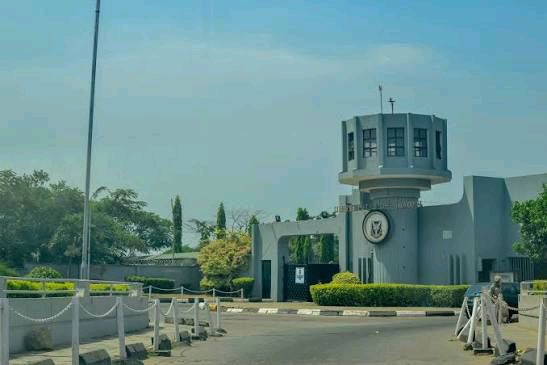

Afe Babalola University (ABUAD) Cut-Off Mark, Courses & School Fees For 2026: Everything To Know
Ask any Nigerian secondary school leaver to name the top private universities in the country, and ABUAD almost always makes the list. There’s a reason for that. In just over a decade, Afe Babalola University has gone from a brand-new campus in Ekiti State to one of the most awarded private universities in Nigeria — and a magnet for students chasing Medicine, Law, Engineering, and Pharmacy without the endless ASUU strike drama.
But prestige comes with questions. What JAMB score do you actually need? How much will it really cost your family per year? Which courses are realistic with your score, and which aren’t? This guide answers all of that — cut-off marks, the full course list, a complete 2026 fee breakdown, admission steps, and the mistakes that quietly cost applicants their spot.
A Quick Background On ABUAD
Afe Babalola University sits in Ado-Ekiti, the capital of Ekiti State, in Nigeria’s South-West. It was founded in 2009 by Aare Afe Babalola (SAN) — one of Nigeria’s most celebrated senior lawyers — and named after him.
What sets ABUAD apart isn’t just age; it’s ambition. The university built a full multi-system teaching hospital (ABUAD Multi-System Hospital), one of the largest of its kind in West Africa, plus an industrial park, a farm, and a College of Engineering with hands-on workshops rather than just lecture theatres. The whole model is built around “town and gown” — connecting academic study to real industry and practice.
Today ABUAD runs colleges covering Medicine and Health Sciences, Law, Engineering, Sciences, Social and Management Sciences, and Arts. It has racked up a string of “best private university” recognitions over the years, and it remains a serious option for families who want quality without leaving Nigeria.
If you’re weighing ABUAD against similar institutions, two of our existing breakdowns are worth a look — the Babcock University cut-off mark guide for another medicine-strong private university, and the Rhema University nursing fees guide if health sciences are your target.
What JAMB Score Gets You Into ABUAD In 2026?
The baseline number is 160. That’s ABUAD’s general UTME cut-off for the 2026/2027 session — a notch above the national floor of 150 that JAMB approved at its May 11, 2026 Policy Meeting in Abuja.
Clear 160 and you’re allowed into the screening process. But “allowed in” and “admitted” are two very different things, and this is where a lot of applicants get it wrong. ABUAD’s competitive courses — Medicine first and foremost, then Pharmacy, Nursing, and Law — operate on their own, much higher departmental benchmarks. A 160 will get a Religious Studies or Sociology applicant through comfortably; it won’t come close for a Medicine hopeful.
So treat 160 as the door, not the destination.
ABUAD Departmental Cut-Off Marks For 2026 (Estimated)
The figures below reflect how competitive each programme typically is. They’re informed estimates based on past admission patterns — ABUAD’s official departmental scores can move a few points either way depending on how strong the applicant pool is in a given year.
| Course/Department | Estimated JAMB Cut-Off | How Competitive |
|---|---|---|
| Medicine and Surgery (MBBS) | 240 – 270 | Extremely high (MDCN-regulated) |
| Pharmacy | 210 – 240 | Very high |
| Nursing Science | 210 – 240 | Very high |
| Medical Laboratory Science | 200 – 230 | High |
| Physiotherapy | 195 – 220 | High |
| Anatomy | 180 – 200 | Moderate-high |
| Physiology | 180 – 200 | Moderate-high |
| Radiography | 190 – 215 | High |
| Law (LLB) | 220 – 250 | Extremely high |
| Mechatronics Engineering | 190 – 215 | High |
| Mechanical Engineering | 185 – 210 | Moderate-high |
| Electrical/Electronics Engineering | 185 – 210 | Moderate-high |
| Civil Engineering | 180 – 205 | Moderate-high |
| Computer Engineering | 185 – 210 | Moderate-high |
| Chemical Engineering | 180 – 205 | Moderate-high |
| Petroleum Engineering | 190 – 215 | High |
| Computer Science | 190 – 215 | High |
| Software Engineering | 190 – 215 | High |
| Cyber Security | 185 – 210 | High |
| Architecture | 185 – 210 | Moderate-high |
| Estate Management | 165 – 185 | Accessible |
| Accounting | 185 – 210 | High |
| Banking and Finance | 170 – 190 | Moderate |
| Business Administration | 170 – 190 | Moderate |
| Economics | 175 – 200 | Moderate |
| Mass Communication | 185 – 210 | High |
| Political Science | 165 – 185 | Accessible |
| International Relations | 175 – 195 | Moderate |
| Sociology | 160 – 180 | Accessible |
| Psychology | 175 – 195 | Moderate |
| English Language | 160 – 180 | Accessible |
| History and International Studies | 155 – 175 | Accessible |
| Religious Studies | 155 – 175 | Accessible |
| Microbiology | 175 – 195 | Moderate |
| Biochemistry | 175 – 195 | Moderate |
| Industrial Chemistry | 165 – 185 | Accessible |
| Biology | 160 – 180 | Accessible |
| Physics | 160 – 180 | Accessible |
| Mathematics | 160 – 180 | Accessible |
Scored somewhere in the 160–185 band? Your safest, fastest routes in are courses like Sociology, English, Political Science, Estate Management, Industrial Chemistry, Biology, and the management programmes. Targeting Medicine or Law instead means you genuinely need to be sitting at 220–270, full stop.
ABUAD blends your UTME result with its own internal screening to reach a final decision — the same broad principle of combining JAMB with a secondary assessment that we explain step-by-step in the UNIOSUN cut-off mark calculation guide.
Courses You Can Study At ABUAD
ABUAD organises its programmes into colleges. Here’s the full spread:
College of Medicine and Health Sciences
- Medicine and Surgery (MBBS)
- Nursing Science
- Pharmacy
- Medical Laboratory Science
- Physiotherapy
- Radiography
- Human Anatomy
- Human Physiology
- Public/Community Health
- Nutrition and Dietetics
College of Law
- Law (LLB)
College of Engineering
- Mechanical Engineering
- Mechatronics Engineering
- Electrical/Electronics Engineering
- Civil Engineering
- Computer Engineering
- Chemical Engineering
- Petroleum Engineering
- Biomedical Engineering
- Materials and Metallurgical Engineering
College of Sciences
- Computer Science
- Software Engineering
- Cyber Security
- Information Technology
- Microbiology
- Biochemistry
- Biology
- Industrial Chemistry
- Physics with Electronics
- Mathematics
- Statistics
- Architecture
- Estate Management
- Quantity Surveying
College of Social and Management Sciences
- Accounting
- Banking and Finance
- Business Administration
- Economics
- Marketing
- Political Science
- International Relations and Diplomacy
- Sociology
- Psychology
- Mass Communication
- Public Administration
- Criminology and Security Studies
College of Arts/Humanities
- English Language and Literary Studies
- History and International Studies
- Religious Studies
- Philosophy
- Languages (French)
- Theatre and Media Arts
Postgraduate School — Masters and PhD programmes across the colleges.
The Medicine-plus-teaching-hospital combination, alongside a genuinely hands-on engineering college, is ABUAD’s biggest selling point versus private universities that only offer “paper” courses.
The Real Cost: ABUAD Fees For 2026
No sugar-coating — ABUAD is a premium private university, and the fees reflect that. They’re broadly the same whatever state you come from (no indigene discount, unlike federal/state schools). Below are tuition-only ranges; accommodation, feeding and extras come on top.
Freshers (100 Level) — Tuition Per Session
| Course Group | Tuition (₦) |
|---|---|
| Arts/Humanities | ₦900,000 – ₦1,300,000 |
| Social & Management Sciences | ₦1,100,000 – ₦1,600,000 |
| Sciences | ₦1,300,000 – ₦1,900,000 |
| Computer Science / Cyber Security | ₦1,500,000 – ₦2,100,000 |
| Engineering | ₦1,700,000 – ₦2,500,000 |
| Architecture | ₦1,600,000 – ₦2,300,000 |
| Law (LLB) | ₦1,800,000 – ₦2,600,000 |
| Nursing / Medical Lab / Physiotherapy | ₦2,000,000 – ₦3,000,000 |
| Pharmacy | ₦2,300,000 – ₦3,300,000 |
| Medicine and Surgery (MBBS) | ₦3,500,000 – ₦5,500,000 |
Returning Students (200 Level+) — Tuition Per Session
| Course Group | Tuition (₦) |
|---|---|
| Arts/Humanities | ₦850,000 – ₦1,200,000 |
| Social & Management Sciences | ₦1,000,000 – ₦1,500,000 |
| Sciences | ₦1,200,000 – ₦1,800,000 |
| Computer Science | ₦1,400,000 – ₦2,000,000 |
| Engineering | ₦1,600,000 – ₦2,400,000 |
| Law | ₦1,700,000 – ₦2,500,000 |
| Nursing / Medical Lab | ₦1,900,000 – ₦2,900,000 |
| Pharmacy | ₦2,200,000 – ₦3,200,000 |
| Medicine (MBBS) | ₦3,400,000 – ₦5,400,000 |
Fees run per session. Medicine sits at the top because of the six-year length, the clinical years, and the cost of running a teaching hospital. To put ABUAD’s numbers in perspective, glance at the UNILAG 100-level school fees breakdown — a federal university where the same year of study costs a fraction of this. You’re paying for stability, facilities, and uninterrupted academic calendars.
Beyond Tuition — What Else You’ll Pay
| Item | Estimate (₦) |
|---|---|
| Acceptance fee (freshers) | ₦150,000 – ₦300,000 |
| Application/screening fee | ₦15,000 – ₦25,000 |
| Hostel accommodation (per session) | ₦400,000 – ₦800,000 |
| Feeding (per session) | ₦300,000 – ₦600,000 |
| Caution/refundable deposit | ₦30,000 – ₦60,000 |
| Health insurance | ₦30,000 – ₦60,000 |
| ICT/technology fee | ₦30,000 – ₦60,000 |
| ID card | ₦5,000 – ₦10,000 |
| Books, laptop & materials | ₦100,000 – ₦250,000 |
| Monthly personal upkeep | ₦30,000 – ₦80,000 |
Add it together and a first-year non-medical student should plan for roughly ₦1,800,000 – ₦3,000,000 all-in. For a Medicine fresher, the realistic first-year figure climbs to ₦4,500,000 – ₦6,500,000+ once accommodation, feeding and upkeep are stacked on the high tuition.
Getting In: Requirements And The Application Path
JAMB: at least 160 in the 2026 UTME (much higher for the competitive courses above), with ABUAD listed as your choice.
O’Level: five credits at not more than two sittings, English and Mathematics included, plus three subjects relevant to your course. For the health sciences and Medicine that means English, Maths, Physics, Chemistry and Biology. Engineering swaps Biology for an extra technical subject; Law leans on Literature and Government; the management courses want Economics in the mix.
Internal screening: ABUAD runs its own assessment — a test and/or documentation review, with interviews common for Medicine and Law.
Direct Entry: IJMB, JUPEB, A-Levels, a strong ND, or a relevant first degree, paired with the O’Level requirements above.
How the process actually flows:
- Register for JAMB, sit the UTME, and put ABUAD as your first choice.
- Once results are out and you’ve cleared the cut-off, apply on the ABUAD admissions portal (abuad.edu.ng) and pay the application fee.
- Sit the internal screening; attend an interview if your course requires one.
- Watch the portal and your email for the admission decision, then accept on JAMB CAPS.
- Pay the acceptance fee within the stated window.
- Settle the session fees, complete registration, collect your hostel allocation and ID, and resume.
Smart Moves That Improve Your Odds
A few things genuinely separate the applicants who get in from those who don’t:
Aim well past the minimum — 190+ opens far more doors than a bare 160, and Medicine/Law applicants should be eyeing 240+. Put ABUAD as first choice rather than a fallback. Sort your finances before you apply, especially for Medicine, so you’re not stranded after acceptance. Keep your O’Level grades strong, particularly the sciences if you’re going the health-sciences route. And prepare properly for the screening — don’t treat it as a formality.
One more practical point: if Medicine is the dream but your score is borderline, line up a related health science (like Medical Lab Science or Physiology) as a realistic backup rather than gambling everything on one competitive slot.
Where Applicants Slip Up
The recurring mistakes are predictable and avoidable — chasing Medicine with a sub-200 score, listing ABUAD as a low choice, the wrong JAMB subject combination, applying without confirming the family can fund the full cost, missing screening or acceptance deadlines, and trusting “agents” who promise guaranteed admission for a fee. None of these are exotic; they just cost people every single year.
If you’re still comparing options, our Babcock University cut-off guide is a useful side-by-side for another top private university with a strong medical school.
Living On Campus: ABUAD Hostels
| Room Type | Per Session (₦) |
|---|---|
| Standard shared (male) | ₦400,000 – ₦650,000 |
| Standard shared (female) | ₦400,000 – ₦650,000 |
| Premium/upgraded rooms | ₦700,000 – ₦800,000 |
| Postgraduate accommodation | Varies |
ABUAD’s hostels are modern, with steady power, water, security and Wi-Fi — part of why the campus is popular with parents who want their children in a controlled, safe environment. Most undergraduates live on site, and the residential setup feeds the close-knit campus culture the university is known for.
ABUAD FAQs
Federal or private? Private. Founded in 2009 by Aare Afe Babalola (SAN), located in Ado-Ekiti, Ekiti State.
2026 general cut-off? 160 — but competitive courses demand much higher departmental scores.
Can 160 get me in? For accessible courses like Sociology, English, Political Science or Biology, yes. For Medicine or Law, no — you’ll need 220–270.
Does ABUAD offer Medicine? Yes, with its own large multi-system teaching hospital — one of the university’s biggest strengths.
Medicine fees? Roughly ₦3.5m–₦5.5m per session in tuition; budget ₦4.5m–₦6.5m+ all-in for the first year.
Non-medical fees? Tuition runs ₦900,000–₦2,600,000 per session depending on the course, with engineering and law at the upper end.
Is there a Post-UTME? ABUAD uses its own internal screening (test/documentation, plus interviews for some courses) rather than a standard public-university Post-UTME.
Hostel guaranteed? On-campus accommodation is available and most students use it; fees run ₦400,000–₦800,000 per session.
What’s ABUAD best known for? Medicine and its teaching hospital, a hands-on College of Engineering, Law, and a long run of “best private university” recognitions.
Why pick ABUAD over a federal university? No strikes, modern facilities, a controlled environment, and strong professional programmes — at a much higher price than federal schools.
Bottom Line
ABUAD has earned its reputation the hard way — by building real infrastructure (a teaching hospital, an engineering college with actual workshops) rather than coasting on marketing. If your family can fund it and your grades back it up, it’s one of the safest bets in Nigerian private education for Medicine, Law, Engineering, Pharmacy and the health sciences.
Be clear-eyed about the numbers, though. The 160 cut-off is just your entry ticket; competitive courses want 220–270. First-year costs land between roughly ₦1.8 million and ₦3 million for most programmes, and ₦4.5 million-plus for Medicine. Get your JAMB subject combination right, list ABUAD first, prepare for the internal screening, and have the funding sorted before you accept.
Before you commit, cross-check the current cut-off marks, fees and screening dates on the official JAMB portal and ABUAD’s own admissions page — figures shift slightly from one session to the next.
Get the preparation right, and Ado-Ekiti could be where the next chapter of your story begins.